


Technology
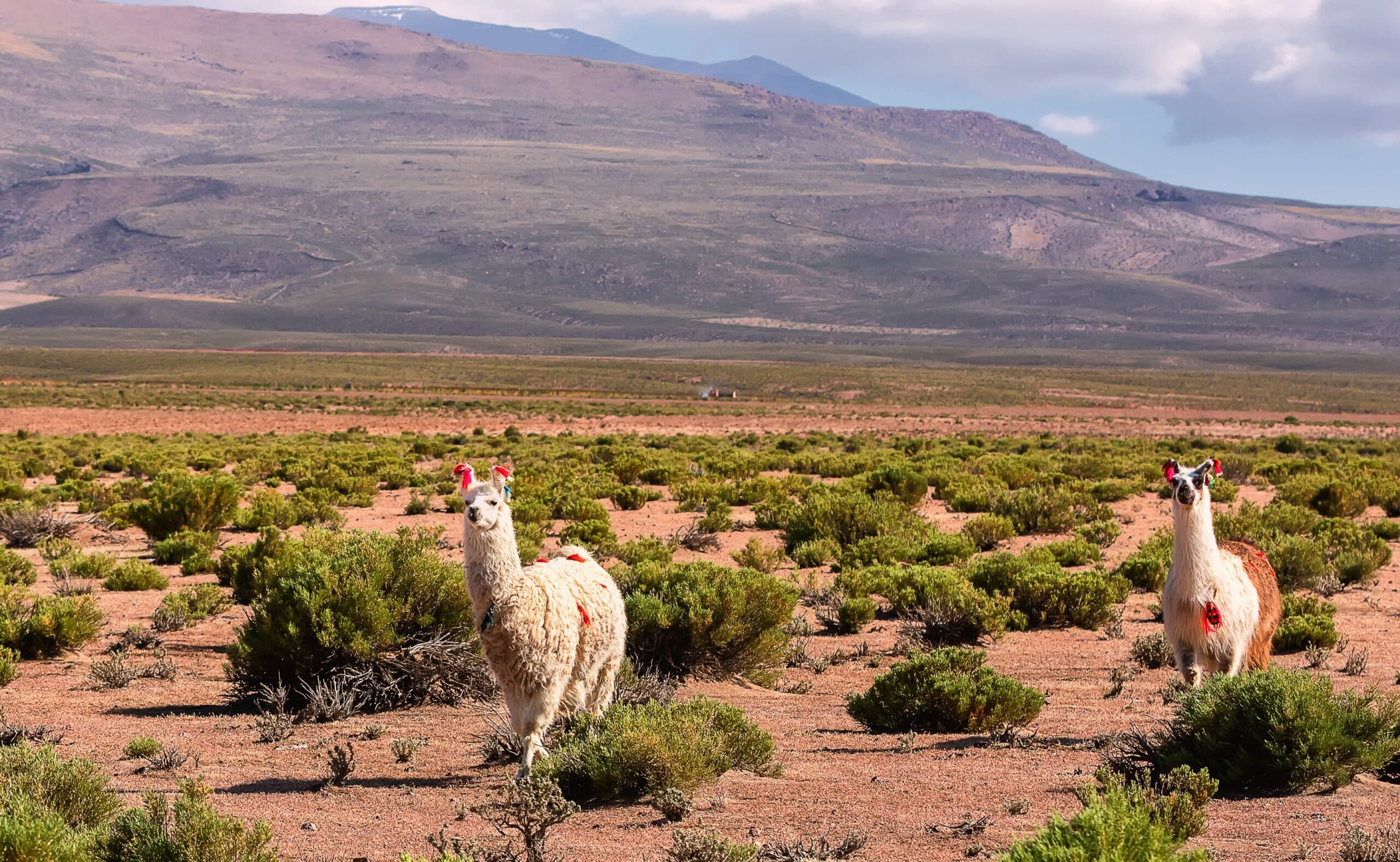
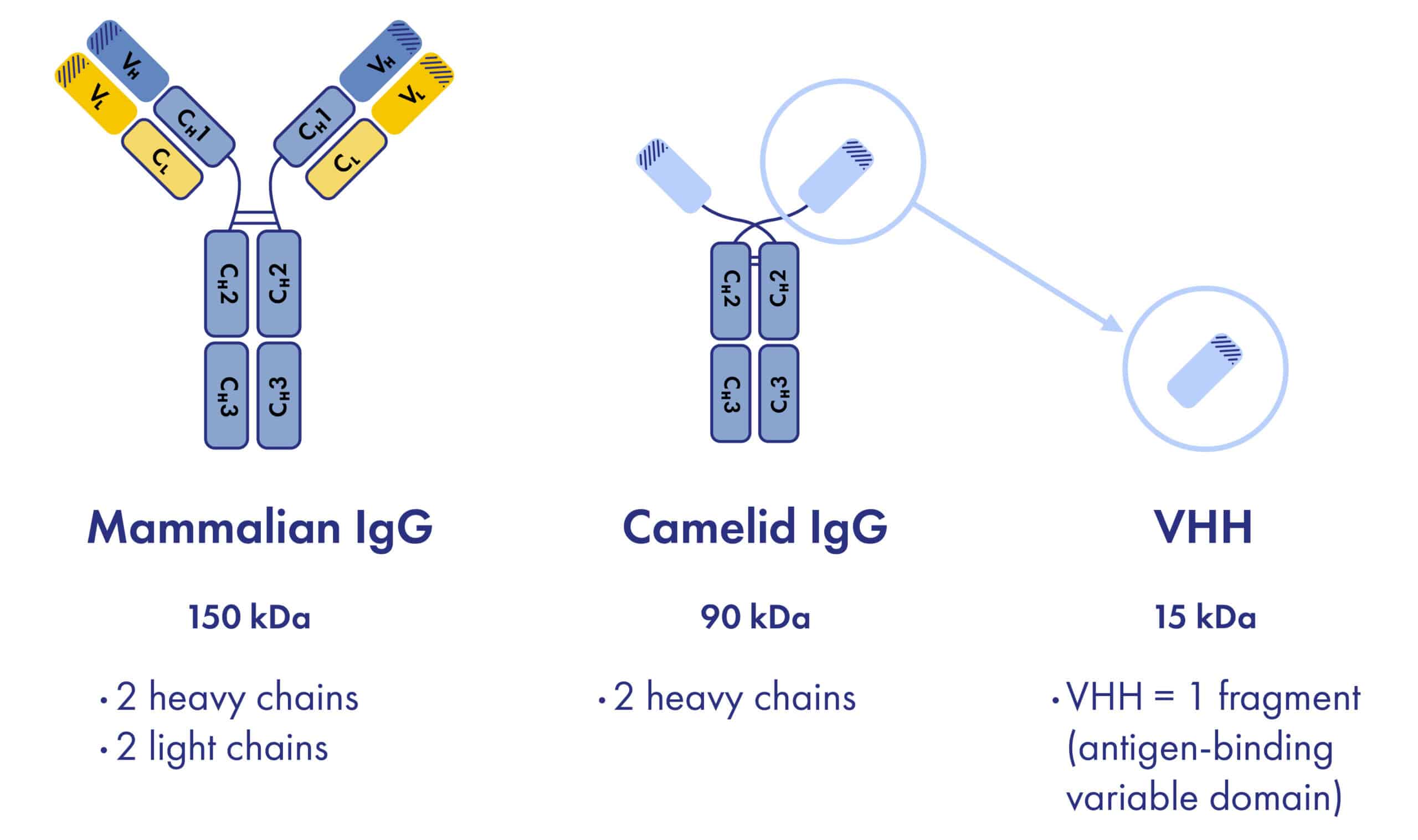
BioAZ’s immunotherapies are based on the engineering of VHHs (Variable domains of Heavy-chain-only antibodies). VHHs are antibody fragments naturally found in camelids (llamas, alpacas, camels, and related species) that bind protein targets (antigens) with exceptional specificity and high affinity.
Their small size, high stability, and ease of engineering make them a highly attractive platform for the development of next-generation biologics.
VHH technology has now achieved clinical validation in humans. Three VHH-based therapeutics have been approved worldwide, while numerous additional candidates are advancing through clinical development across a broad range of indications, including oncology, immunology, and inflammatory diseases.
What is a VHH?
Advantages of VHH
Targeting
• Can bind hidden epitopes
DMPK
(Drug Metabolism and Pharmacokinetics)
• Strong penetration into tissues
• Less immunogenic (vs. IgG)
• Possible engineering to increase the lifespan and integration into vectors
• Biodegraded into amino acids
Production
• Reduced development times
Formulation
• Excellent stability, including in hostile environments (pH, T°, proteases)
• Can be administered orally for local effect
Pipeline
Piglet immunocastration project
Discover our immunocastration project for Pigs in 3 minutes:
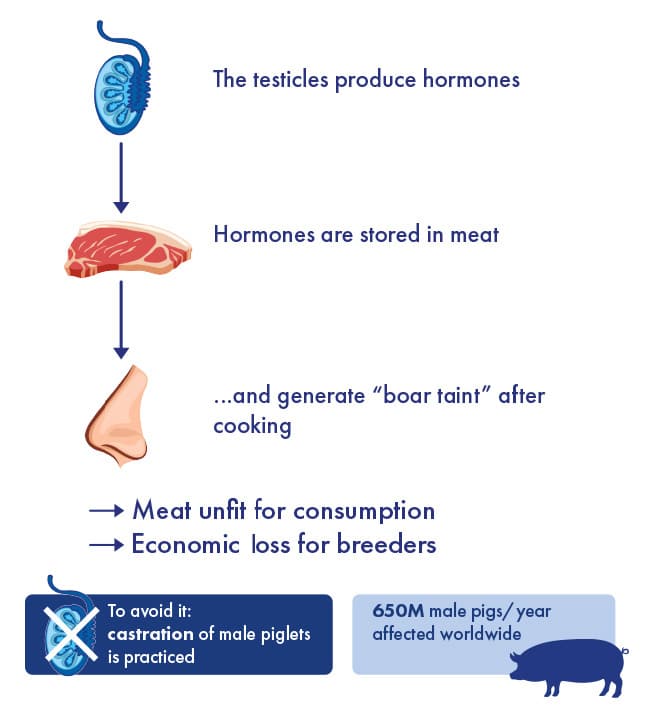
In non-castrated male pigs (entire males), hormones produced by the testicles are responsible for the “boar taint.” This unpleasant smell of the meat is detected while cooking and makes the meat unsuitable for consumption.
To prevent the “boar taint,” male piglets are castrated at birth in most countries around the world. This procedure is performed live (without relieving the pain) except in certain European countries: France, Germany, Denmark and the Netherlands. Since 2022, these states have banned this practice that generates animal suffering: the law requires breeders to practice castration with anesthesia and analgesia.
However, the implementation of anesthesia/analgesia is not only technical but also pricey in terms of products and labor. This additional burden is borne by the breeders. It is therefore necessary to offer them an alternative. In addition, an ethical and economic option is desired to put a definitive end to live castration within the still too numerous countries where this practice is still allowed.
Boar taint mechanism
To meet these expectations, BioAZ has designed and is developing an immunotherapy in a painless injection. The patented technology, BioCas001, is based on VHH engineering. It aims to block GnRH in order to induce biological castration and prevent the appearance of boar taint.
Mechanism of action of BioCas001
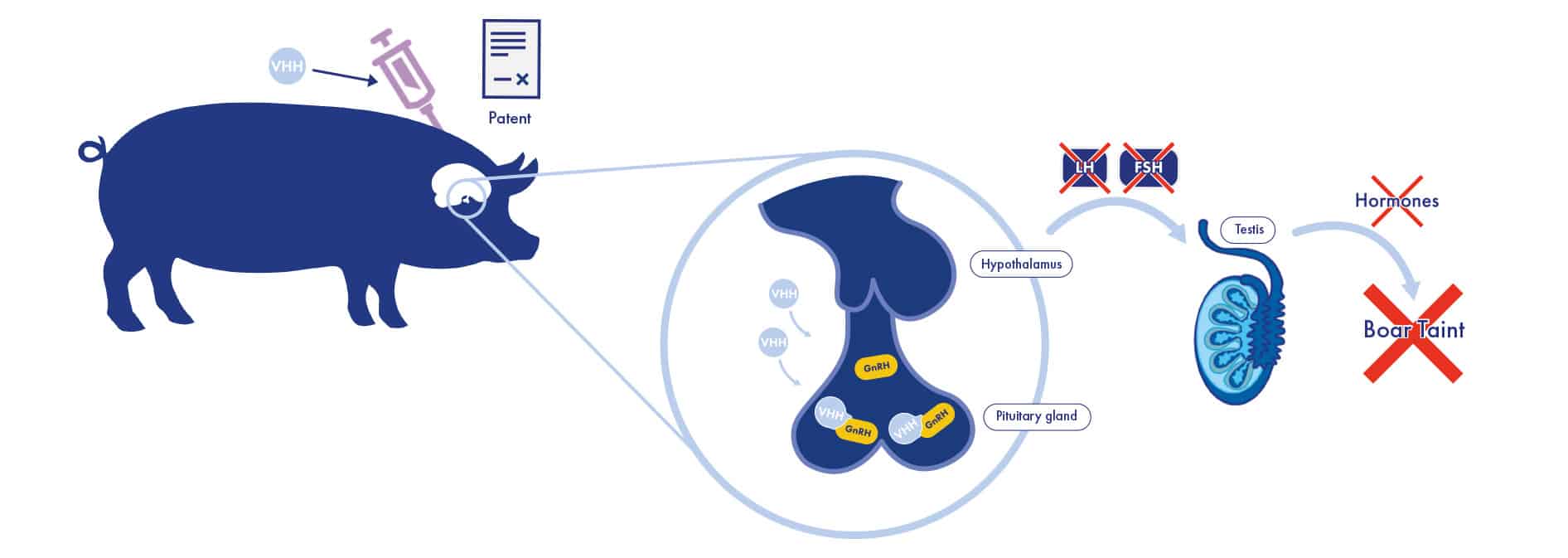
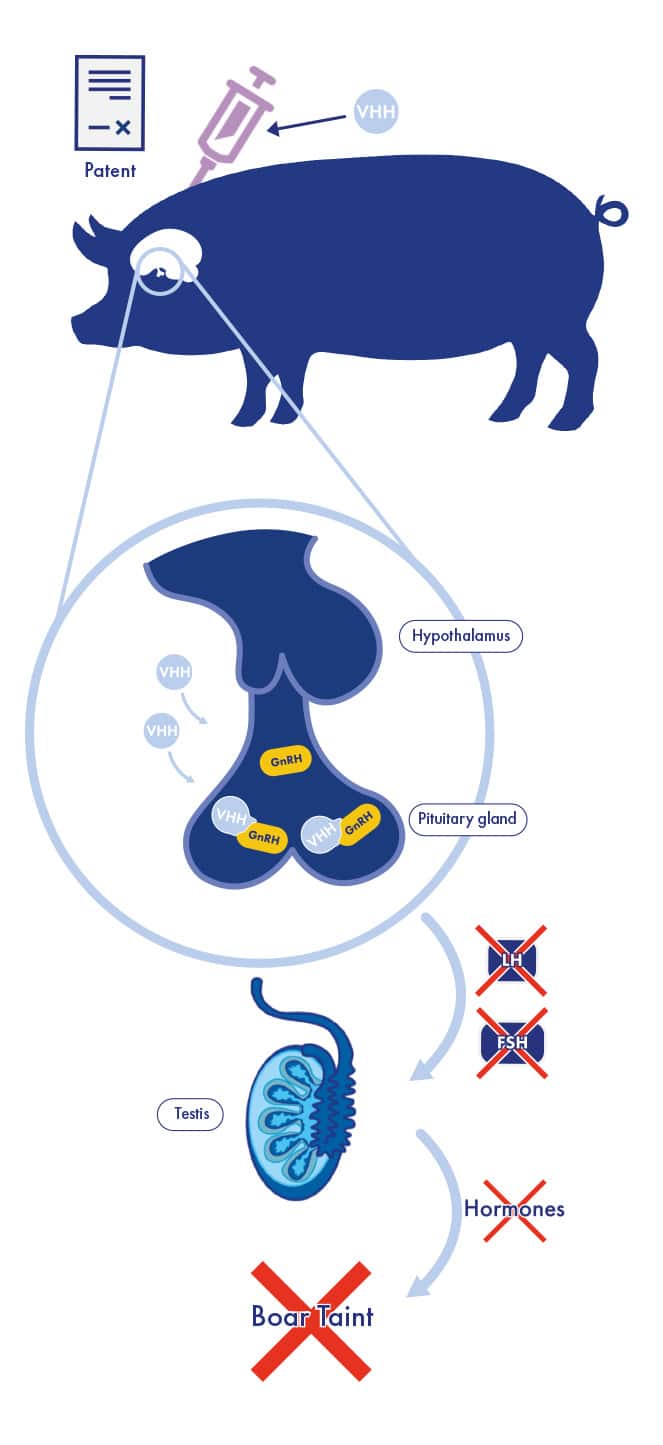
To meet these expectations, BioAZ has designed and is developing an immunotherapy in a painless injection. The patented technology, BioCas001, is based on VHH engineering. It aims to block GnRH in order to induce biological castration and prevent the appearance of boar taint.
Dog Immunocastration Project
Similar to its approach for piglets, BioAZ is developing an immunotherapy as an alternative to surgical castration in dogs. This solution provides a less invasive and safer method for animals while addressing key challenges in animal welfare and canine population management.
Discover our immunocastration project for Dogs in 3 minutes:
Immunotherapy project against calf cryptosporidiosis
Beyond its immunocastration programs, BioAZ is developing an innovative oral VHH-based immunotherapy to prevent neonatal calf cryptosporidiosis, a major parasitic disease responsible for neonatal diarrhea and significant economic losses in livestock production.
Today, there is no effective treatment available in the United States, while in Europe, current options rely mainly on antibiotics, with limited efficacy and major concerns related to antimicrobial resistance.
Our approach aims to provide a sustainable, safe, and biodegradable alternative capable of reducing symptoms and significantly decreasing antibiotic use, in line with One Health principles.
Discover our immunotherapy project against calf cryptosporidiosis in 3 minutes: